 +91 74280 97301


Human resource leadership in contemporary enterprises faces a silent, formidable operational hurdle that traditional performance metrics routinely fail to capture. While executive boards concentrate on digital transformation, talent acquisition funnels, and quarterly deliverables, a significant portion of senior talent operates under immense, invisible strain. High-performing professionals across engineering, finance, and strategic operations are caught in an intricate domestic crossfire—managing aggressive business targets while simultaneously orchestrating intensive, multi-generational household care.
When an employee must coordinate complex medical interventions, manage progressive cognitive decline, or oversee post-acute rehabilitation for a dependent relative during a critical product launch, standard workplace flexibility falls short. The resulting cognitive fragmentation leads to reactive decision-making, diminished creative output, and mounting emotional exhaustion.
For forward-thinking CHROs, building a robust caregiving support program for workplace environments is no longer an optional human resources experiment. It is a vital structural imperative designed to safeguard enterprise human capital, mitigate presenteeism, and anchor long-term organizational stability.
Conducting a Granular Audit of Workforce Vulnerability
Deploying an effective care infrastructure begins long before selecting vendor software or publishing internal intranet announcements. Most organizations operate under a false assumption regarding their employees’ domestic realities, largely because social stigma forces workers to conceal their caregiving struggles behind closed doors. Human resource directors must initiate a confidential, data-driven assessment to uncover the true scope of family dependencies across their teams.
This foundational audit requires looking beyond surface-level demographic surveys and examining behavioral indicators of silent strain:
- Analyzing Utilization Patterns: Reviewing historical Employee Assistance Program (EAP) utilization data specifically for stress spikes related to family friction, sudden leave requests, or erratic scheduling habits among mid-career cohorts.
- Evaluating Managerial Feedback Loops: Equipping department heads and team leads with qualitative frameworks to identify subtle behavioral shifts—such as uncharacteristic withdrawal, declining strategic bandwidth, or chronic fatigue—without crossing personal boundaries.
- Mapping Multi-Generational Demographics: Recognizing that employees aged 35 to 55 frequently carry the heaviest dual-front load, requiring targeted benefits architecture tailored specifically to elder care and specialized household navigation rather than generic wellness perks.
Establishing Clinical-Grade Infrastructure Partnerships
Once enterprise leadership acknowledges the necessity of family support, the primary strategic pitfall is settling for superficial digital solutions—such as basic caregiver forums or unverified helpline directories. Managing complex geriatric care or chronic medical dependencies requires genuine, human-led clinical expertise.
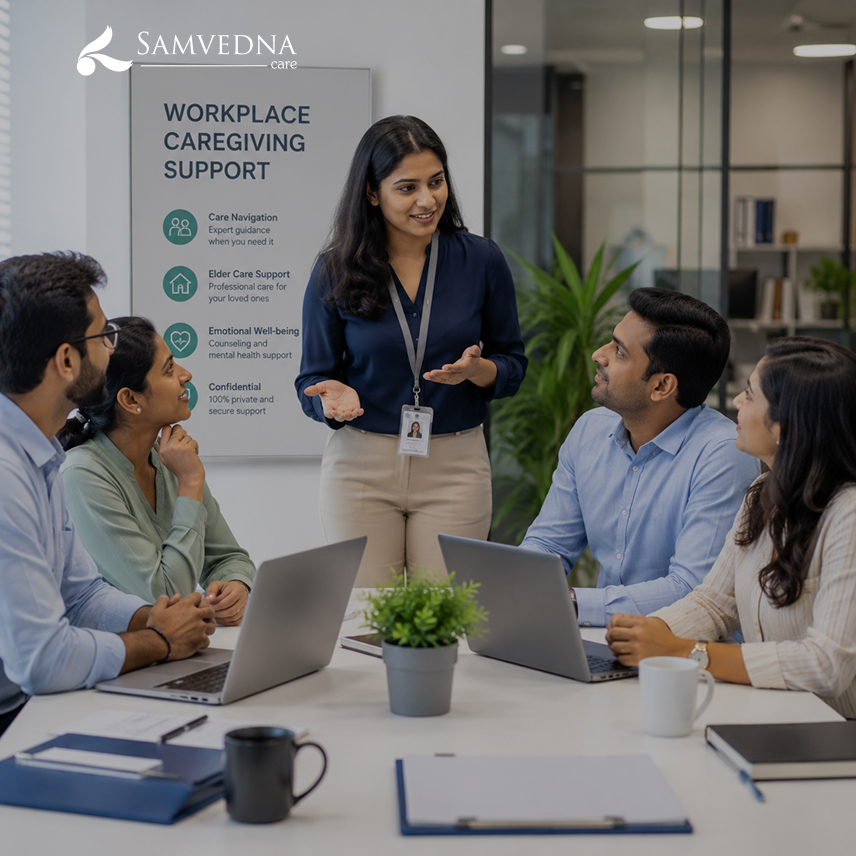
When organizations partner with specialized clinical networks like Samvedna Care, they integrate professional case management directly into their enterprise ecosystem. This clinical partnership introduces critical operational layers:
- Dedicated Care Navigation: Assigning professional geriatric care managers who absorb the daunting logistical weight of medical billing, hospital discharge coordination, and assisted living research, freeing the employee from mid-day administrative panic.
- Proactive Clinical Home Care Integration: Facilitating verified in-home nursing, physical therapy, and diagnostic support so that routine medical management does not demand erratic, emergency leaves from the worker.
- Specialized Grief and Burnout Counseling: Offering confidential, clinical psychological interventions for employees navigating the heavy emotional toll of anticipatory grief and caregiver burnout.
Cultivating an Internal Culture of Psychological Safety
Implementing an exceptional benefit program holds zero value if employees fear that utilizing it will jeopardize their professional reputation or signal weakness to leadership. True program adoption depends entirely on establishing ironclad psychological safety and active executive sponsorship.
Human resource leaders must dismantle the stigma surrounding caregiving responsibilities through deliberate cultural messaging:
- Executive Modeling of Vulnerability: When C-suite executives and senior directors openly discuss their own experiences managing multi-generational households, it grants implicit cultural permission for the broader workforce to seek help without shame.
- De-Identified Data Transparency: Communicating clearly to the workforce that individual engagement, session notes, and diagnostic details remain strictly confidential and entirely invisible to internal management, reinforced by enterprise-grade data security protocols.
- Continuous, Multi-Channel Advocacy: Avoiding once-a-year onboarding mentions by integrating caregiving resources into regular leadership meetings, team check-ins, and monthly internal communications, ensuring support remains top-of-mind before crises strike.
Measuring Strategic Return on Investment Across Enterprise Metrics
Evaluating the ultimate success of a workplace family care initiative requires shifting away from vanity metrics—such as program registration counts—and examining hard organizational impact. A high-performing support ecosystem fundamentally transforms institutional stability.
When structured care infrastructure takes root, leadership teams observe a sharp decline in voluntary attrition among critical senior talent, a dramatic reduction in the profit drain of presenteeism, and a measurable boost in cross-functional project execution. Employees whose domestic foundations are professionally stabilized exhibit deeper organizational loyalty and sustained creative output.
Charting the Future of Resilient Organizational Design
Modern enterprise resilience is inextricably linked to the holistic well-being of the human beings driving daily execution. Organizations that evolve beyond outdated, individual-centric employee wellness programs and embrace comprehensive family care build enduring competitive advantages in the global talent market.
By lifting the invisible weight of domestic management off the shoulders of your workforce, you protect your most valuable strategic assets and foster a culture capable of sustained, high-level innovation.
To explore how your enterprise can seamlessly integrate holistic senior care and specialized family support frameworks tailored to your unique organizational culture, discover the specialized Corporate Mental Health and EAP Services offered by Samvedna Care.