+91 74280 97301


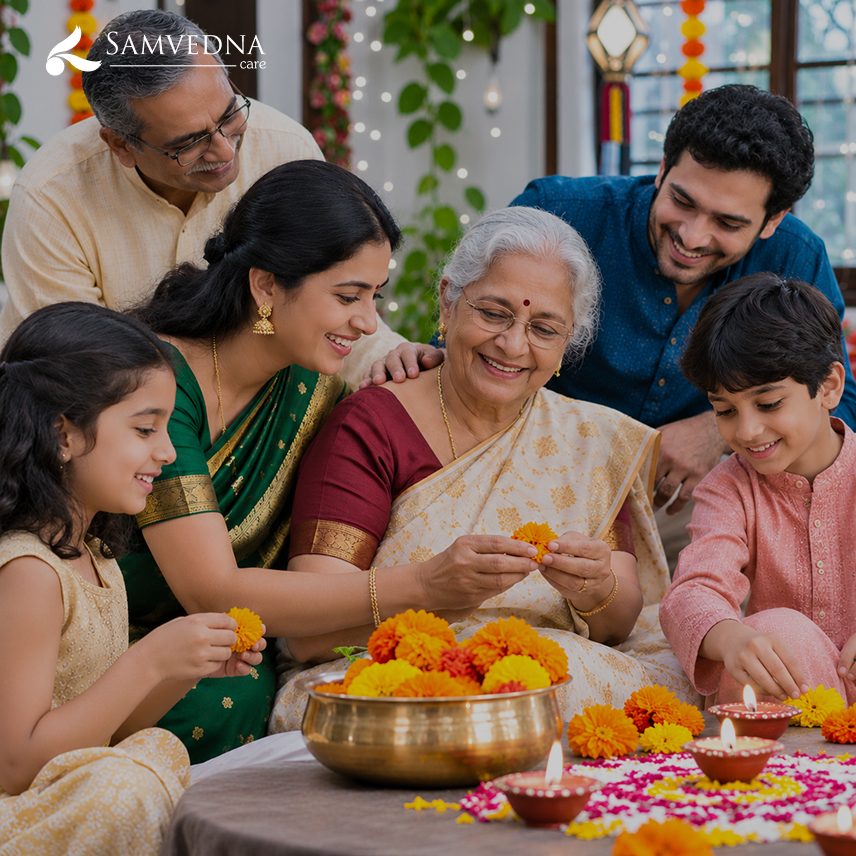
Family celebrations are an important part of staying connected with loved ones. Whether it is Diwali, a birthday, an anniversary, or a family reunion, these occasions bring families together through shared traditions, conversations, and memories.
However, when a loved one receives a dementia diagnosis, family celebrations may require a little more thought and preparation. At Samvedna Care, we understand that supporting a person living with dementia also means helping families navigate everyday experiences and preserve meaningful connections. With the right approach, patience, and flexibility, families can create celebrations where everyone feels included.
For a person living with dementia, a joyful gathering for others may sometimes feel confusing, overwhelming, or exhausting. Loud conversations, unfamiliar surroundings, changes in routine, and too many people interacting at once can make it difficult to follow what is happening. They may withdraw from conversations, become restless, repeat questions, or struggle to recognise familiar faces.
However, dementia does not mean a person can no longer enjoy family celebrations or participate in meaningful family moments. With a little planning, understanding, and flexibility, families can create experiences that allow their loved ones to participate in ways that feel comfortable and reassuring.
Seven ways to make family celebrations more dementia-friendly
1. Keep the Celebration Familiar and Comfortable
Familiar surroundings can offer a sense of security to someone living with dementia. If possible, organise celebrations in a place they recognise, such as their home or a familiar family member’s house.
Try to maintain their regular routine around meals, medication, and rest. Avoid making too many changes to their environment at once. If you are hosting guests, introduce changes gradually rather than rearranging the entire house.
Familiar music, photographs, decorations, and everyday objects can also help create a sense of connection. Sometimes, the comfort of recognising something familiar matters more than remembering the occasion itself.
2. Avoid Overwhelming Them with Too Much Stimulation
Family gatherings can become noisy and crowded, particularly during festivals and large celebrations. Multiple conversations, loud music, bright lights, and constant movement may cause sensory overload.
To make the environment more comfortable:
- Keep music at a manageable volume.
- Avoid having several people speak to them at the same time.
- Create a quiet space where they can sit or rest if they feel overwhelmed.
- Limit the number of visitors interacting with them at one time.
- Be mindful of fatigue and allow them to take breaks.
Remember, participation does not have to mean staying with everyone throughout the celebration. Even spending a short, meaningful time with family can make the occasion special.
3. Involve Them in Simple and Meaningful Activities
One of the most meaningful ways to include a person with dementia in family celebrations is to offer opportunities to participate rather than simply making them a spectator.
Think about activities they have enjoyed in the past and adapt them to their current abilities and comfort levels.
For instance:
- During Diwali: They could help arrange flowers, sort decorations, or place battery-operated diyas with supervision.
- During birthdays: They could help choose a cake, arrange napkins, or participate in singing.
- During family gatherings: They could look through old photographs or listen to familiar songs.
- During festive meals: They could help with simple, safe tasks such as arranging fruit or folding napkins.
The focus should be on enjoyment, not completing the task perfectly. Avoid correcting them if they make mistakes or struggle to follow instructions. What matters is the experience of being involved.
4. Make Conversations Easier and More Inclusive
Sometimes, people living with dementia may struggle to remember names, follow conversations, or respond quickly. This can become particularly noticeable during family gatherings when several people are talking at once.
Family members can make communication easier by:
- Introducing themselves instead of expecting the person to remember names.
- Speaking slowly and using simple, clear sentences.
- Asking one question at a time.
- Giving them enough time to respond.
- Avoiding repeated memory-testing questions such as, “Do you remember who I am?”
- Including them in conversations without putting them on the spot.
If they repeat a story or ask the same question several times, respond with patience. Correcting them repeatedly or pointing out memory lapses can cause unnecessary distress.
A reassuring conversation is often more valuable than one centred on remembering facts.
5. Use Music, Food and Familiar Traditions to Create Connections
Connections are not always created through conversations alone. Familiar songs, traditional recipes, photographs, smells, and festive rituals may offer opportunities for emotional connection and engagement.
For example, playing a song they enjoyed when they were younger, preparing a favourite family dish, or revisiting familiar festive traditions may encourage participation.
Even when a person cannot recall the name of a song or the details of an occasion, they may still respond to its rhythm, melody, or familiarity. Responses will vary from person to person, so pay attention to what seems comforting and enjoyable for your loved one.
Rather than focusing on whether they remember the celebration, pay attention to how they experience it in the moment.
6. Respect Their Comfort and Allow Them to Participate at Their Own Pace
Not everyone with dementia will want to participate in every activity. Some may enjoy being surrounded by family, while others may prefer a quieter environment or shorter interactions.
Watch for signs of discomfort, such as restlessness, irritability, withdrawal, repeated attempts to leave, or visible fatigue. These may indicate that the person needs a break.
Avoid forcing participation or interpreting withdrawal as disinterest. Give them the freedom to step away, rest, or return when they feel comfortable.
Inclusion is not about making someone participate in everything. It is about ensuring they feel welcome, respected, and valued, regardless of how much they choose to participate.
7. Remember That Caregivers Need Support Too
While families often focus on making celebrations comfortable for their loved ones, the emotional and practical demands on caregivers can go unnoticed.
Planning a gathering, managing changes in routine, supporting communication, and responding to unexpected situations can be exhausting. Caregivers may also experience guilt when they are unable to involve their loved one in every activity or when a celebration does not go as expected.
Caregiver counselling can help caregivers understand their emotions, develop practical dementia-care strategies, manage stress, and build more realistic expectations of themselves and their loved ones.
At Samvedna Care, caregiver counselling and support can help families navigate the emotional challenges of dementia and find compassionate ways to engage with their loved ones. Professional guidance can also help families understand how care needs may change over time and adapt their approach accordingly.
Learn more about our Dementia Care services and Caregiver Enablement programme.
Making Every Celebration Meaningful
A dementia diagnosis may change how a person experiences family celebrations, but it does not take away their need for connection, belonging, and affection. Conversations may become shorter, familiar activities may need adjustments, and family traditions may look a little different. Yet these moments can continue to hold meaning.
If you are finding it difficult to navigate the challenges of dementia care, you do not have to manage them alone. Samvedna Care offers support for families and caregivers through dementia-care guidance, caregiver enablement, and counselling.
Sometimes, a familiar song, a favourite sweet, a shared smile, or simply sitting together can become the most meaningful part of a celebration.
Because inclusion is not about remembering every moment. It is about the feeling that you are still a part of it.