+91 74280 97301


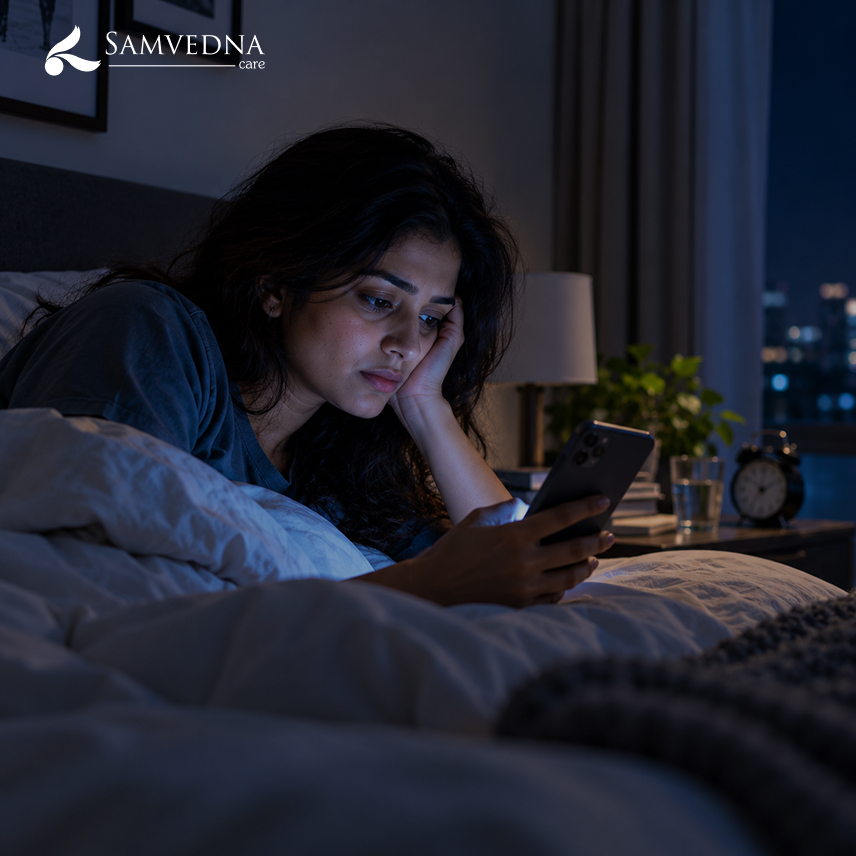
It starts with, “I’ll just check one more thing.”
A quick look at your phone turns into twenty minutes of news, messages, videos and social media posts. You see a disturbing headline, then another. Someone you know seems to be doing wonderfully. Another post makes you worry about something you had not even considered before.
You finally put the phone down, but your mind does not switch off.
For many people, this has become part of the nightly routine. The body is tired, but the brain is still processing everything it has seen. Over time, this pattern can affect sleep, mood, concentration and the way we handle everyday stress.
For those who find it difficult to break this cycle on their own, online mental health counselling can offer a convenient way to access professional support and understand the patterns affecting their emotional well-being.
When Scrolling Stops Feeling Like A Break
Phones are often our easiest escape at the end of a long day. After work, studies, household responsibilities or family commitments, opening an app can feel like a harmless way to relax.
The problem begins when scrolling leaves you feeling more tense than you were before.
Constant exposure to upsetting news, arguments, alarming headlines or carefully edited versions of other people’s lives can keep the mind alert. Even when there is nothing immediately wrong in your own surroundings, your brain may continue responding to what it has just consumed.
This is one reason doomscrolling anxiety can be difficult to recognise. There may not be one obvious event causing distress. Instead, it can build quietly through repeated exposure to information that makes you feel worried, helpless or overwhelmed.
Why The Phone Follows Us Into Bed
There is also a simple behavioural pattern at work.
You feel tired → you reach for your phone → you scroll → something catches your attention → you become emotionally engaged → you keep scrolling.
Soon, bedtime moved later than planned.
And because the content is often unpredictable, your brain keeps waiting for the next thing.
This is where screen time and mental health become connected. The issue is not that every minute spent on a screen is harmful. Phones can help us stay connected, work, learn, communicate and even access mental-health support.
The bigger question is: How are you feeling after using the screen, and what is it replacing?
If scrolling regularly replaces sleep, quiet time, exercise, conversations or other activities that help you recharge, it may be worth changing the pattern.
The Quiet Hours Can Feel The Loudest
Daytime can keep our attention occupied. There are emails to answer, people to speak with, tasks to finish and places to be.
At night, those distractions disappear.
That is often when worries about work, relationships, finances, health or the future come back into focus.
For some people, night time anxiety feels like lying awake while the mind runs through every possible problem. A small concern can suddenly feel enormous at 1 a.m.
You might think:
- “What if something goes wrong tomorrow?”
- “Did I say the wrong thing earlier?”
- “Why am I not doing better?”
- “What if I can’t handle what is coming next?”
The more you try to force these thoughts away, the more noticeable they may become.
A Few Things To Try Tonight
You do not have to completely give up your phone to create a healthier evening routine.
Start small.
Create A Scrolling Cut-Off
Choose a realistic time when you stop consuming news and social media. It does not have to be hours before bed. Even thirty minutes can create some breathing room.
Keep The Phone Away From Your Pillow
If your phone is within reach, checking it requires almost no effort. Putting it across the room creates a small pause between the urge and the action.
Replace The Habit, Don’t Just Remove It
Try something that genuinely feels calming:
- Listening to quiet music
- Reading a few pages
- Taking a warm shower
- Stretching gently
- Writing down tomorrow’s tasks
- Practising slow breathing
Notice What You Consume
Not every piece of content deserves your attention at the end of the day. If particular accounts or types of news consistently leave you distressed, consider muting or unfollowing them.
Give Your Mind Somewhere Else To Go
If thoughts keep circling, write them down. You do not need to solve everything before sleeping. Sometimes putting a worry on paper is enough to stop carrying it around mentally.
When Self-Help Doesn’t Feel Like Enough
Changing a habit is easier when you understand what is driving it.
Sometimes excessive scrolling is not really about the phone. It may be an attempt to avoid uncomfortable feelings, loneliness or uncertainty. At other times, anxiety itself may be making it difficult to stop checking for reassurance.
If doomscrolling anxiety keeps returning despite your efforts, it may help to speak with a mental-health professional.
Counselling can provide a private space to understand patterns without judgement. Instead of simply being told to “use your phone less,” you can explore what you are feeling before, during and after the behaviour.
That distinction matters.
Looking Beyond Screen Habits
Reducing screen use can be helpful, but it is not a universal solution for every emotional difficulty.
If you regularly experience racing thoughts, persistent worry, low mood, sleep difficulties or an inability to relax, there may be something deeper that deserves attention.
Understanding screen time and mental health means looking at the whole picture: sleep, relationships, work, stress, physical activity, emotional needs and coping habits.
The goal is not to create a perfect digital routine. It is to build a life in which your phone is a useful part of your day rather than something that controls your attention.
You Don’t Have To Figure It Out Alone
If evenings have become something you dread, you are not weak or lacking discipline. Sometimes the quiet simply gives worries more room to speak.
And if night time anxiety is repeatedly interfering with your sleep or everyday life, reaching out for support can be a meaningful first step.
Samvedna Care offers online mental health counselling for people who want professional support from a comfortable and accessible setting. A conversation with a qualified professional can help you understand what is happening, develop healthier coping strategies and work towards better emotional wellbeing.
Conclusion
Your phone does not have to be the last thing you see before sleeping or the first place you turn when your mind feels unsettled. Small changes can help, but you do not have to handle persistent anxiety on your own.
A calmer night often begins with understanding what your mind is asking for—not simply putting the phone away.
Contact Samvedna Care to speak with a mental-health professional and take the first step towards feeling more at ease.