 +91 74280 97301


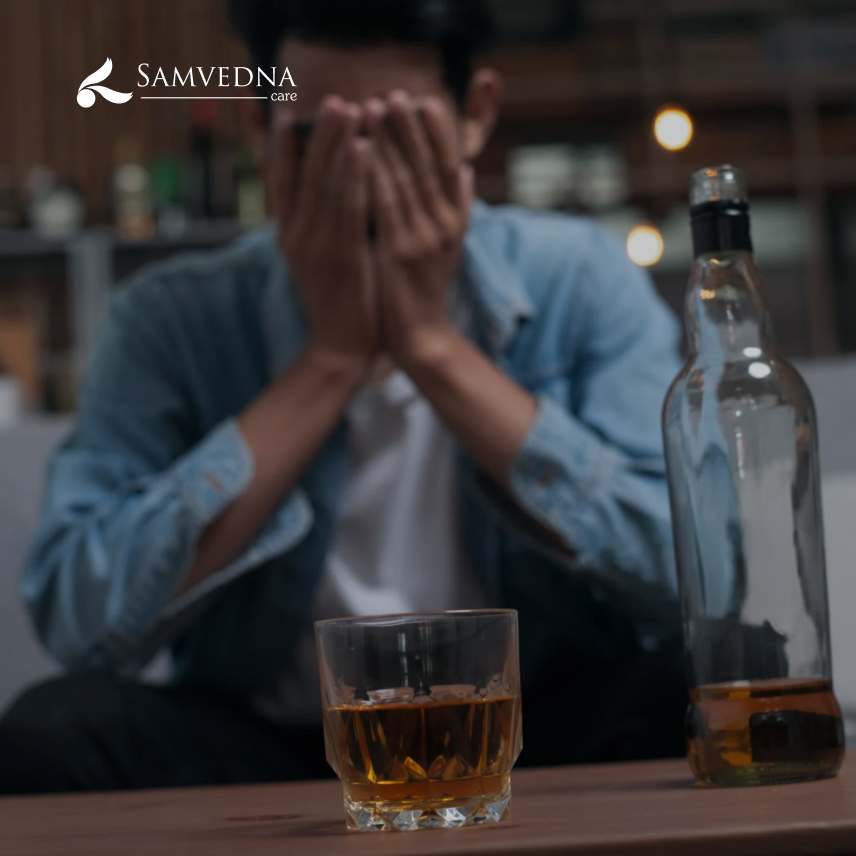
It usually doesn’t start with a problem. It starts with a moment.
A drink to unwind after a long day. Toast at a celebration. A way to feel a little more relaxed in a room full of people. It feels harmless, even helpful, and in many situations, it is. Alcohol often slips into our routines quietly, becoming a familiar companion in both our highs and our lows.
But over time, alcohol can begin to do more than just “take the edge off.” It starts influencing the way you think, the way you feel, and the way you respond to situations, often in ways that aren’t immediately obvious. Understanding these shifts is important, and at Samvedna Care through online mental health counselling we help you explore these patterns with greater awareness and clarity.
During Alcohol Awareness Month, it’s worth pausing to reflect not just on how much we drink, but why we drink and what role alcohol plays in our emotional lives.
Here are 4 signs to watch out for alcohol dependence:
- Drinking to cope with stress regularly
- Feeling more anxious after drinking
- Difficulty socialising without alcohol
- Using alcohol to “switch off” emotions
How Alcohol Affects Your Thinking
Alcohol primarily affects the brain by slowing down its functioning, especially the areas responsible for:
- Judgment
- Decision-making
- Self-control
This is why, after a few drinks, you might feel more confident, more open, or more willing to take risks. Conversations flow easier, hesitation reduces, and things that once felt intimidating may suddenly feel manageable.
However, what often feels like confidence is reduced inhibition. Your brain is processing information differently, filtering less, and reacting faster. Over time, if alcohol becomes something you rely on in social or stressful situations, it can quietly weaken your trust in your own natural ability to navigate those moments without it.
How Alcohol Changes Your Emotions
Emotionally, alcohol creates a temporary shift. It can ease stress, soften difficult feelings, and offer a sense of relief. This is one of the key reasons people turn to it, not just socially, but emotionally. For a while, it works. You feel lighter, calmer, and more at ease.
But this relief is short-lived. As alcohol leaves your system, it often brings a rebound effect of heightened anxiety, low mood, or a return of the very emotions you were trying to escape, sometimes more intensely. This can create a loop where drinking becomes a way to manage the discomfort it indirectly contributes to.
How Alcohol Impacts Your Reactions
Your reactions also change under the influence of alcohol. Situations may feel more intense than they are.
You might :
- Respond Impulsively
- Misunderstand others’ intentions
- Experience stronger emotional reactions
- Make poor and hasty decisions
What makes this shift complex is how gradual it is. What begins as occasional use can slowly become a pattern, a default way to unwind, cope with stress, or feel more comfortable in certain environments. It’s not always about how much you drink, but about how much you depend on it to manage your inner world.
There’s also a subtle impact on your self-awareness. When alcohol becomes a regular way to cope, it can create distance between you and your emotions. Instead of understanding what you’re feeling and why, it becomes easier to numb, delay, or avoid those experiences altogether. While this might feel like relief in the moment, it often leaves underlying concerns unaddressed.
This is why awareness matters. Not in a way that feels critical or restrictive, but in a way that helps you reconnect with your own patterns.
Pause and ask yourself:
- When do I feel the strongest urge to drink?
- What am I trying to change or avoid in that moment?
- How do I feel the next day both physically and emotionally?
These reflections aren’t about judgment. They’re about understanding.
Because when you begin to understand your relationship with alcohol, you also create space for new choices. You may find yourself exploring other ways to unwind, express, or process what you’re feeling and ways that feel more sustainable and aligned with your well-being.
If alcohol has quietly become your go-to way of coping, it might be worth exploring what’s underneath that need—with the right support.
Support can make this process easier. Talking to someone, reflecting in a safe space, or simply feeling heard can shift how you navigate these patterns. Samvedna Care, through online mental health counselling, provides that space by helping you explore your thoughts, emotions, and coping strategies with guidance and without judgment.