
 +91 74280 97301


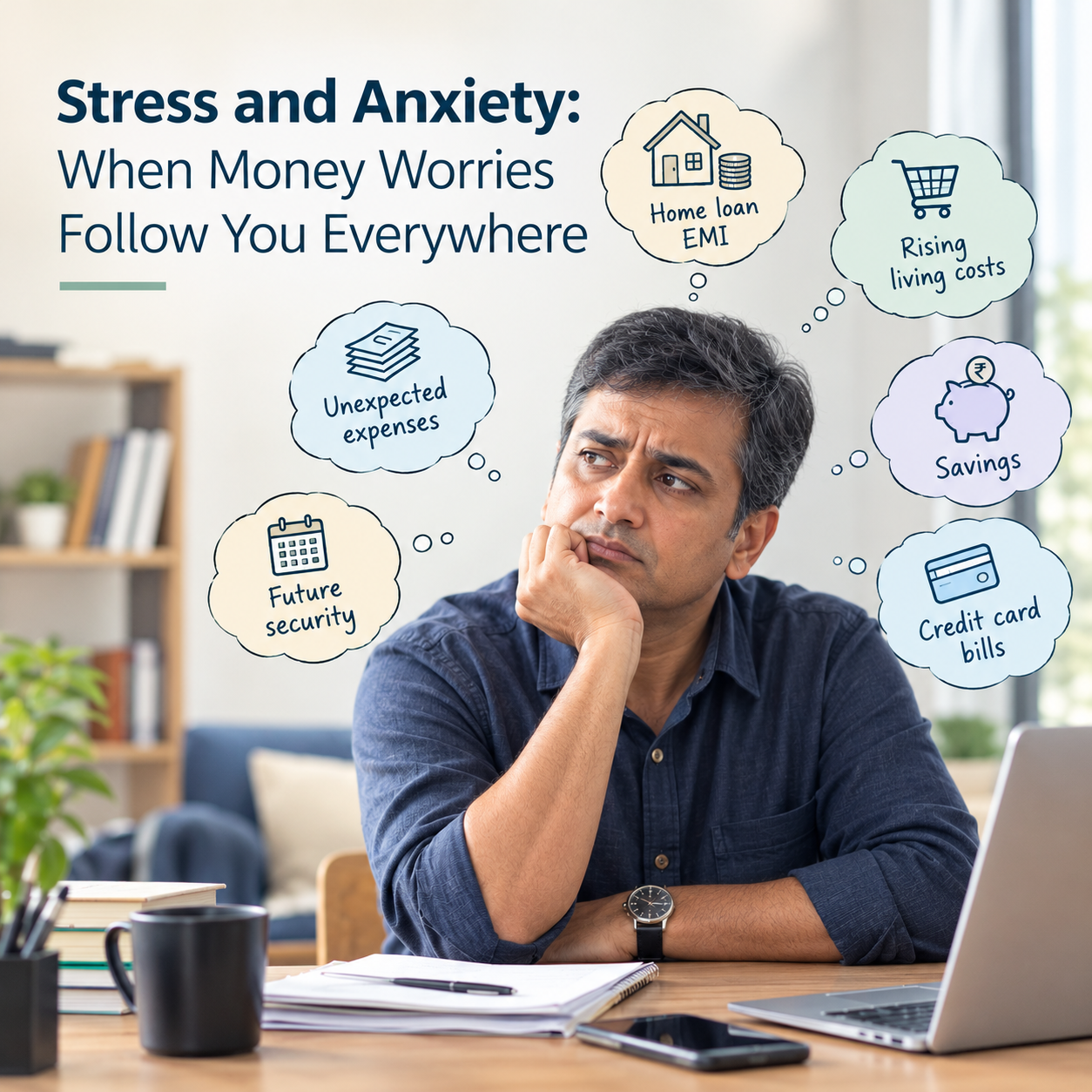
You’re sitting in a meeting, but your mind is somewhere else. You’re calculating next month’s expenses, thinking about an upcoming loan payment, or wondering whether your savings will be enough if something unexpected happens.
You tell yourself you’ll think about it later. But later, the worry follows you home. Even when you finally get into bed, your mind starts calculating again.
Sound familiar?
Financial stress is often treated as a problem that can be solved with better budgeting or more careful spending. While practical planning matters, it doesn’t address the entire picture. Money worries can affect how we sleep, how we relate to people, how we perform at work, and how secure we feel about our future.
At Samvedna Care, we recognise that financial uncertainty is not just about numbers. It can also be an emotional burden that people carry quietly, often while trying to keep every other part of their lives running smoothly.
When Financial Stress Becomes a Constant Background Noise
Not all financial stress comes from being unable to make ends meet. Sometimes, it comes from the pressure of making sure that you always can.
You may have a stable job and a regular income, yet worry about rising expenses, your children’s education, ageing parents’ healthcare, retirement, or the possibility of losing your job. You may be managing everything responsibly and still feel that you are falling behind.
The difficulty is that financial worries rarely remain confined to the moment when you check your bank balance. They can become a constant background noise, interrupting your attention even when you’re doing something completely unrelated.
You might find yourself overthinking a routine purchase, feeling guilty about spending money on yourself, or repeatedly checking your finances for reassurance. You may also avoid looking at your accounts altogether because you fear what you might find.
Both reactions can come from the same place: the need to feel secure in a situation that feels uncertain.
Why Does Money Have Such a Strong Emotional Impact?
Money is rarely just about money. For many of us, it represents security, independence, responsibility, and the ability to care for the people we love.
When financial stability feels threatened, it can bring up deeper fears.
What if I cannot support my family? What if I have to depend on someone else? What if all the hard work I’ve put in still isn’t enough?
Social expectations can make these fears more intense. We often compare our salaries, homes, lifestyles, and savings with those of our peers. Somewhere along the way, financial milestones can become measures of personal success.
When our lives do not match these expectations, we may experience guilt, shame, or a sense of inadequacy, even when our circumstances are beyond our control.
There is also pressure to keep these concerns private. People may hesitate to discuss financial difficulties because they fear being judged or appearing incapable of managing their responsibilities.
So, they continue showing up at work, attending family gatherings, and fulfilling their obligations, while privately struggling with uncertainty.
The Impact Doesn’t Stop at the Office Door
Imagine an employee who has been worrying about a large expense at home. They arrive at work, open their laptop, and try to concentrate. But part of their attention remains occupied by the problem.
A routine task takes longer. A small mistake feels disproportionately stressful. An ordinary conversation becomes irritating. By the end of the day, they feel exhausted, even though their workload has not changed.
This is one way financial stress can affect workplace wellbeing. Persistent worry can make concentration, decision-making, emotional regulation, and engagement more difficult.
It can also create a difficult cycle. Financial pressure increases anxiety, anxiety affects work, and concerns about performance or job security add another layer of financial worry.
Of course, not every employee experiencing reduced concentration or irritability is struggling financially. But recognising that personal circumstances can influence workplace behaviour helps organisations respond with greater understanding rather than making assumptions about an employee’s motivation or commitment.
What Can Help When Financial Worries Feel Overwhelming?
The goal is not to convince yourself that everything will be fine. Sometimes, financial challenges are real and require practical solutions. The aim is to address those challenges without allowing worry to take over every part of your day.
1. Separate What Is Happening from What You Fear Might Happen
Write down the immediate concern and the possible outcomes you’re imagining. Ask yourself which situation requires action now and which remains uncertain.
This can help you move from anticipating every possible problem to identifying the next manageable step.
2. Give Your Worries a Specific Time and Place
Set aside time to review expenses, organise payments, or consider available options. When the same thoughts return during work or personal time, remind yourself that you have a designated time to address them.
This takes practice, but it can reduce the tendency to revisit the same concerns throughout the day.
3. Notice the Emotional Cost of Constantly Staying Alert
Are you sleeping poorly? Have you become more irritable with people you care about? Do you struggle to enjoy activities because you feel you should be doing something more productive?
These changes can indicate that stress is affecting your wellbeing and deserves attention.
Recognising these signs early can help you take steps towards managing financial stress and anxiety before they begin to affect other areas of your life.
4. Financial Difficulty Is Not a Personal Failure
Circumstances change. Unexpected expenses arise, responsibilities increase, and plans do not always work out.
You can acknowledge a financial challenge and take responsibility for the next step without judging your entire worth by your current situation.
Your financial circumstances are part of your life. They do not define your value as a person.
5. Reach Out Before You Reach Your Limit
Talking to someone you trust can help you feel less alone. You do not have to share every detail of your financial situation to acknowledge that you are feeling overwhelmed.
If worry has become persistent or is affecting your sleep, relationships, or daily functioning, counselling can help you understand your emotional responses and develop healthier ways to manage anxiety.
For working professionals who find it difficult to make time for in-person support, online counselling for stress and anxiety can offer a more accessible way to seek professional help while balancing work and personal responsibilities.
For financial decisions themselves, a qualified financial professional may help you evaluate practical options.
How Can Organisations Support Employees?
Employers cannot eliminate every source of financial stress, nor should employees be expected to discuss private financial matters at work. However, organisations can create an environment where seeking support for emotional difficulties feels safe and accessible.
An Employee Assistance Programme (EAP) can offer employees a confidential space to explore the impact of personal stressors on their mental wellbeing. Counselling may help them manage anxiety, work through persistent worry, and address related concerns such as sleep difficulties, relationship strain, or burnout.
Organisations can strengthen this support by communicating available services clearly, explaining confidentiality, and encouraging employees to seek help without waiting for their difficulties to affect their work significantly.
Access to online counselling through workplace mental health programmes can also make support more accessible, allowing employees to seek help without adding the pressure of travelling to appointments or managing another demanding commitment.
Recognising financial stress as a potential influence on employee wellbeing is not about making assumptions about people’s personal lives. It is about creating a workplace where employees can access support when they need it.
You Deserve Peace of Mind, Even When Everything Isn’t Sorted
We often postpone our wellbeing until life feels more manageable. We tell ourselves we’ll relax once a loan is repaid, our savings improve, or uncertainty at work settles down.
But life rarely offers complete certainty. There may always be another expense, another responsibility, or another decision to make.
Looking after your mental health doesn’t mean ignoring financial realities. It means recognising that you deserve emotional support while you work through them.
At Samvedna Care, we understand how personal challenges can affect workplace wellbeing. Through counselling and Employee Assistance Programmes (EAPs), employees can access professional support to manage anxiety, navigate uncertainty, and protect their emotional wellbeing.
Financial stability matters. So does your peace of mind. You don’t have to wait until the pressure becomes overwhelming to seek support.