
 +91 74280 97301


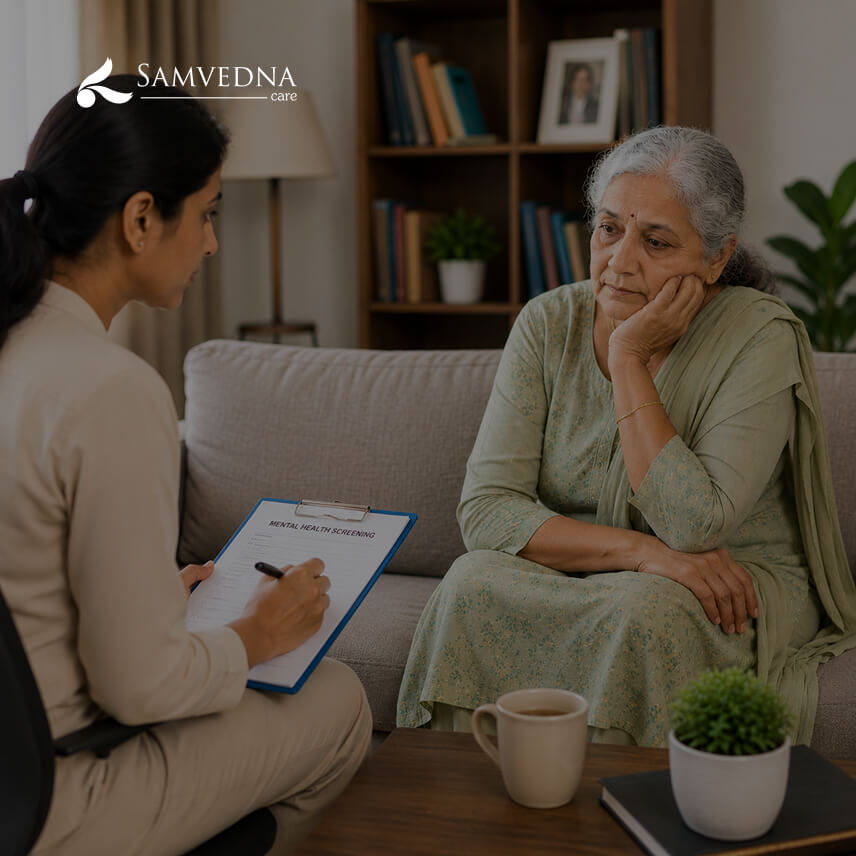
Many physical changes accompany the aging process. There are changes in sleep cycles. Changes also include some slowing down in bodily activities and reduced sharpness in memory functions. There might also be less socialization for older individuals following retirement or due to ill-health and deaths in the family.
This is why families often overlook the signs of psychological distress in their older loved ones. Sadness is attributed to their growing old. Memory problems are shrugged off saying that these are normal. Irritability is taken to be part of one’s personality. The fact that the individual withdraws is also seen in a good light since “they like their own company.”
But it is essential to note that not all changes are benign.
Psychological well-being is vital even in old age. Elderly people suffer from different forms of psychological problems such as depression, anxiety, loneliness, symptoms of dementia, grief, and emotional distress. Early detection would help a lot in managing these illnesses. That is the role played by mental health screening.
Mental health screening does not mean labeling someone. It simply involves the assessment of psychological conditions.
Why Senior Mental Health Is Often Ignored
The older adults might not express their emotions easily. They belong to that era where people didn’t talk about mental problems. They might insist that they are “okay,” despite suffering from depression.
The family members may emphasize their physical wellbeing more. Issues such as blood pressure, diabetes, heart problems, and medications might be talked about, but mood changes, insomnia, forgetfulness, and other issues are often ignored until they become a serious concern.
This delay can make recovery harder.
A senior may not say, “I am depressed.” Instead, they may say:
- I do not feel like eating
- I am tired all the time
- I do not want to meet anyone
- I cannot sleep properly
- I feel useless
- I keep forgetting things
- I feel worried for no reason
These are not just passing comments. They may be signs that the person needs support.
What Is Mental Health Screening?
Mental health screening is a structured way to understand a person’s emotional and psychological wellbeing. It usually includes questions about mood, sleep, memory, behaviour, social connection, anxiety, and daily functioning.
For seniors, screening can help identify early signs of:
- Depression
- Anxiety
- Cognitive decline
- Dementia-related concerns
- Grief
- Loneliness
- Stress due to illness
- Adjustment issues after retirement or loss
A screening does not replace a full clinical diagnosis. It helps decide whether a detailed mental health assessment or professional mental health support may be needed. It gives families and professionals a clearer starting point.
Signs Families Should Not Ignore
Every senior is different. Some may show emotional distress quietly. Others may become more restless or irritable. The important thing is to notice changes that are new, repeated, or affecting daily life.
Here are some signs that may need attention:
1. Sudden Withdrawal from People
If an older person who used to enjoy socialization stops engaging with people, then this needs to be taken note of. He or she may turn down phone calls, social activities, or even lose interest in interacting with people.
This could be associated with depression, anxiety, low energy, poor hearing, memory issues, or feeling neglected.
2. Changes in Sleep or Appetite
Excessive sleep, not enough sleep, frequent awakenings, or lack of interest in eating may indicate emotional problems. At times, the family tends to think that this is just a normal sign of aging. However, it could also be a symptom of depression, anxiety, or even stress.
3. Increased Irritability or Anger
Not everyone will exhibit clear signs of sadness. However, some may become irritable, angry, suspicious or easily upset. It is not always easy to understand this behavior among the elderly.
Instead of considering the situation as stubbornness, it may be wise to determine the underlying cause of such behaviors.
4. Memory and Confusion Concerns
Some memory loss is natural as one ages. However, if one exhibits confusion or fails to recall things that he or she does on a regular basis, this may be a problem that requires attention.
Mental evaluation may be used to determine if there are any problems concerning cognition.
5. Loss of Interest in Daily Life
On the other hand, if the elderly person loses interest in activities that he or she previously enjoyed, then the individual may have depression. Some behaviors associated with this are lack of interest in engaging in conversations with the family members, walking, praying, cooking and watching favorite programs.
Interest loss is one of the overlooked symptoms of depression.
Why Early Screening Can Help
The reason why early screening helps is because it gives enough time to act on the matter. At an early stage of the problem, professionals can figure out the needs of the individual, which might be counseling, psychiatry, dementia care, change of lifestyle, etc.
The benefits include:
- Better understanding of emotional changes
- Early support for depression or anxiety
- Timely identification of memory concerns
- Reduced family confusion
- More personalised care planning
- Improved quality of life
- Support for caregivers as well
For many families, the screening brings relief. It gives words to something they were sensing but could not explain.
Screening Can Reduce Stigma
Many seniors hesitate to seek mental health support because they fear being judged. They may think counseling is only for serious illnesses. Some may worry that family members will treat them differently.
This is why the conversation matters.
Mental health screening should be presented gently. Families can say, “Let us understand what may help you feel better,” instead of “Something is wrong with you.”
A respectful approach can make seniors feel safe and heard.
How Samvedna Care Supports Seniors
Mental health screening is offered through Samvedna Care to older people and their families. It is always conducted peacefully and privately under the supervision of qualified mental health professionals.
The objective of the screening process is to understand the patient and his needs, rather than just observing the symptoms. Seniors might need counseling, emotional support, dementia tests, or even psychiatric consultations, as well as treatment plans for mental issues involving family advice.
Moreover, Samvedna Care realizes that families of the senior patients also tend to feel confused about their condition and anxious about their loved ones. Mental health screening brings clarification for everyone and allows making decisions with confidence.
Conclusion
It is unfair to neglect mental issues among seniors because of their age. Emotional issues, forgetfulness, social isolation, and other symptoms of depression should be taken seriously, no matter how old the patient is.
Screening will help you identify potential issues at an earlier stage and provide proper care for them. It does not label anyone. On the contrary, screening opens the door to a greater understanding and appropriate assistance.
Reach out to Samvedna Care to book a mental health screening and take the first step towards better emotional wellbeing for your loved one.