 +91 74280 97301


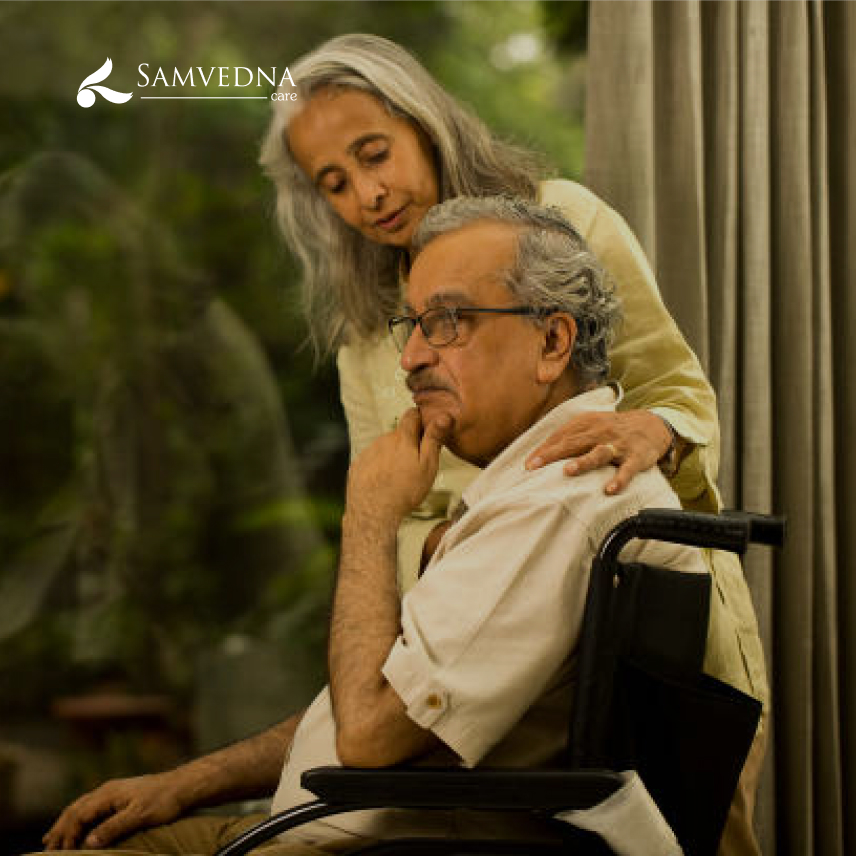
Monica and Anil had shared a happy and fulfilling marriage for over three decades. With their children grown and living independently, they were finally looking forward to a quieter phase of life together. But slowly Monica started noticing changes in Anil’s behaviour. Anil began repeating questions, misplacing things and unusually withdrawn.
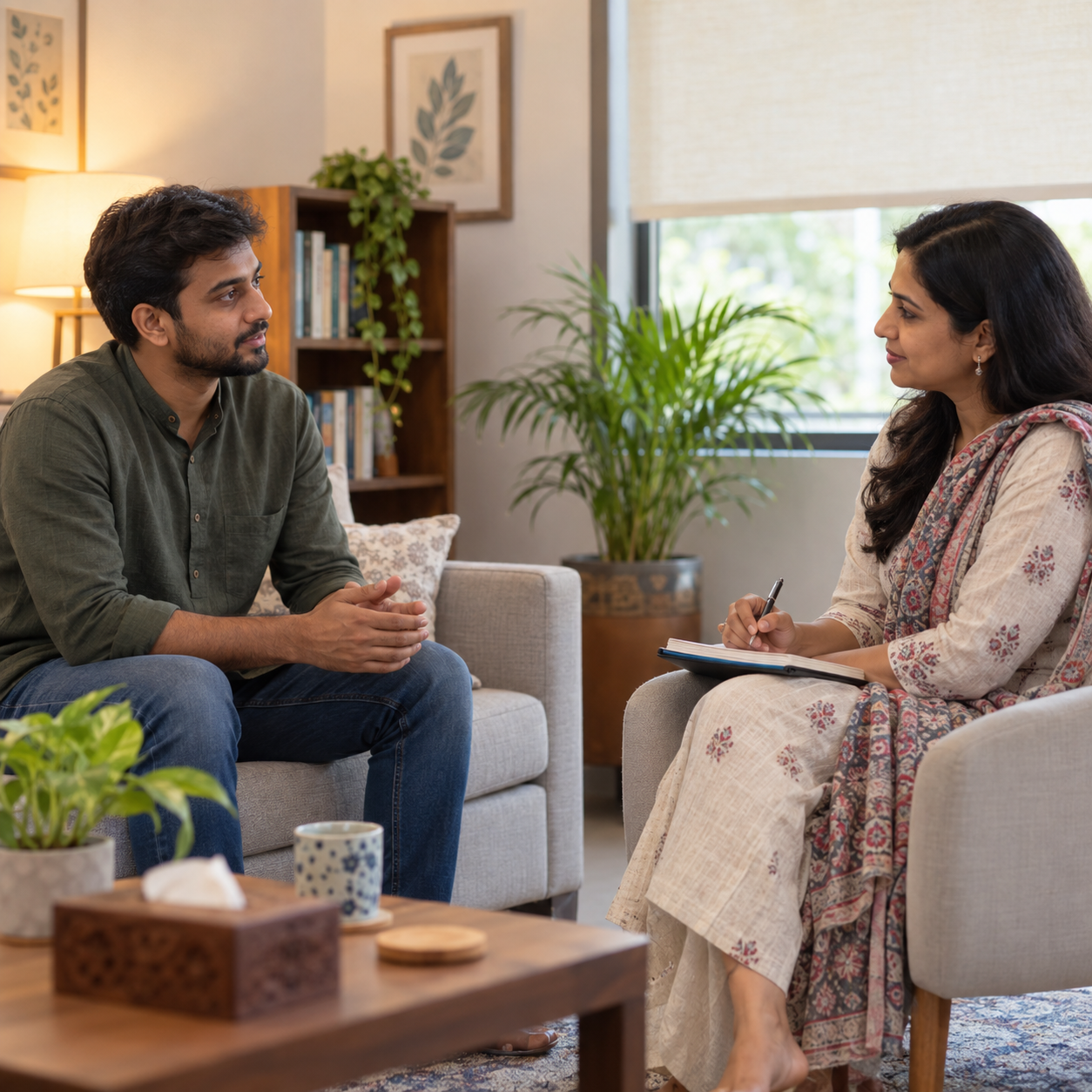
A dementia diagnosis gave them the ill-fated news that Anil had early-stage Dementia. Life didn’t stop, but it changed. Monica was heartbroken and overwhelmed. Wanting to understand how to support Anil while coping herself, she reached out to Samvedna Care for caregiver counselling.
When Dementia enters a marriage, the shift is rarely sudden. It unfolds slowly, through forgotten conversations, changes in mood, and moments of confusion. And somewhere along the way, a spouse finds themselves stepping into a role they never consciously chose for themselves.
Monica began managing finances, appointments, and daily routines. More than that, she found herself offering constant reassurance, adjusting how she communicated, and staying attuned to Anil’s emotional state.
One evening, it struck her: she was no longer just a partner; she had become a caregiver.
The Psychological Shift
This transition from spouse to caregiver is not just practical, It’s deeply emotional.
Many experience:
- Ambiguous loss (grieving someone who is still present)
- Loneliness within the relationship
- Emotional fatigue from constant caregiving
- Guilt for feeling overwhelmed
This is where structured support like caregiver counselling becomes essential. At Samvedna Care we have supported many spouses who have partners living with dementia navigate the complex journey of cargiving.
Practical Ways to Support a Partner with Dementia:
1. Simplify Communication [H3]
Use short, clear sentences. Focus on tone rather than correctness to reduce frustration.
2. Don’t Take It Personally [H3]
Behavioral changes are part of the condition, not a reflection of your relationship.
3. Create Small Moments of Connection [H3]
Shared routines, music, or simply sitting together can maintain emotional closeness.
4. Set Realistic Expectations [H3]
Your partner may not respond the way they used to—and that’s okay.
5. Ask for Help Early [H3]
You don’t have to do this alone. Caregiver counselling through services like Samvedna Care can provide emotional support, coping tools, and a safe space to process your experience.
Love, But in a Different Form
One of the hardest truths to accept is this: when Dementia becomes a part of your marriage, the relationship doesn’t end, but it changes form.
For Monica, love began to look different over time.
It looked like patience when answering the same question again and again.
It looked like gently guiding Anil through moments of confusion instead of correcting him.
It looked like sitting beside him in silence, finding comfort in presence rather than conversation.
It looked like staying, especially on the days that felt unfamiliar and emotionally heavy.
This is not the version of love most people imagine when they think of marriage. When dementia enters a marriage, it rewrites roles, but it does not erase the bond.
If you find yourself in this space, remind yourself:
You are allowed to feel what you feel, without guilt.
You are allowed to need support; this journey is not meant to be carried alone.
And you are not alone in this experience, even if it often feels isolating.
Support systems like caregiver counselling at Samvedna Care can help you make sense of these changing roles, while also holding space for your own emotional wellbeing.
Because behind many closed doors, there are spouses quietly becoming caregivers, learning, adapting, and holding on to the essence of their relationship in new and meaningful ways.