 +91 74280 97301


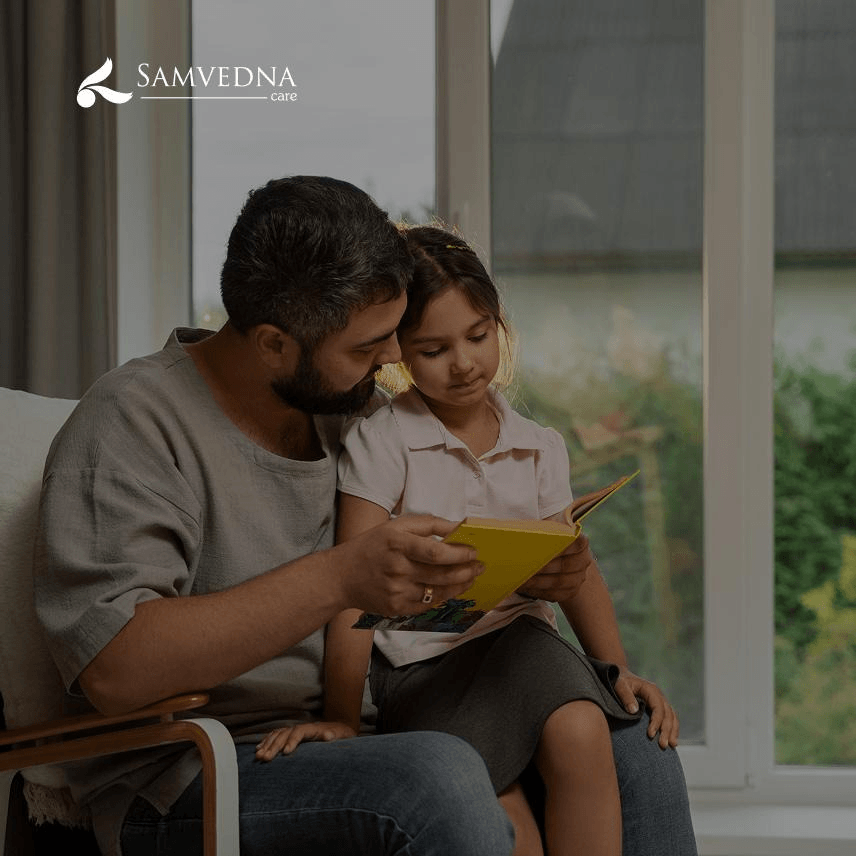
Think about the dads in your life, your father, your husband, your brother, your friend. When was the last time someone asked him how he was really doing, not as a parent, but as a person? Chances are not recently. And chances are, if you asked, he’d say “I’m fine” even if he wasn’t.
For decades, being a “good father” has meant one thing above all: provide and protect. What’s missing from that picture is how he feels. That silence comes at a cost, and it’s time we talked about it.
Research suggests that approximately 8–10% of fathers experience depression during the perinatal period, with rates increasing when maternal depression is also present.
At Samvedna Care, we keep noticing the same gap: paternal mental health is overlooked, even as awareness around maternal mental health keeps growing. While awareness of professional mental health support is growing and more people are turning to services such as online counselling for anxiety, fathers are still frequently left out of conversations about emotional wellbeing.
The Weight Fathers Carry Alone
Many men carry invisible expectations through every stage of fatherhood: never look anxious, always have the answer, absorb the stress without showing it. These pressures don’t go away; they simply change shape. A new father worries about money and sleepless nights. A few years later, he’s exhausted from constant supervision and missing his own time. Then his child becomes a teenager who barely talks to him. Later still, the house is quiet, and he’s left with questions about what comes next.
At every stage, the emotional weight is real. Yet most conversations about parental mental health focus narrowly on the postpartum period, almost always about mothers. Fathers experience anxiety and depression throughout the parenting journey too, often undiagnosed, because nobody’s really looking.
Why the Silence Persists
Sound familiar? A lot of it comes down to upbringing. Many men grew up watching their own fathers treat stoicism as strength, so emotional expression was never modeled, and the cycle repeats.
There’s also the fear of looking inadequate. Saying “I’m overwhelmed” can feel like admitting failure at the one job men are supposed to handle effortlessly.
And honestly, there’s often just no space for it. Partners are dealing with their own pressures. Friends may not ask, and workplaces rarely check in. If you’ve ever wondered why the dad you know seems “fine” but a little distant underneath, this is often why.
This lack of emotional awareness can make it difficult for fathers to identify when they need support. For fathers who find it difficult to talk about their struggles, online counselling for anxiety can offer a confidential, judgment-free space to explore emotions, build coping skills, and gain professional support.
What Gets Missed
Unaddressed stress can affect sleep, physical health, relationships, workplace performance, and overall quality of life. Over time, emotional strain may become harder to recognize because it starts to feel normal. And kids, no matter their age, pick up on a parent’s emotional state even when nothing’s said out loud.
There’s also a real opportunity here. When a father models emotional awareness, naming what he feels, asking for help, his kids learn that emotional honesty isn’t a weakness. That matters enormously for sons, who often look to their fathers for cues about what masculinity is allowed to look like.
It can also quietly wear on a marriage. When one partner bottles up stress while the other is visibly stretched thin with caregiving, resentment and distance can creep in. Naming that strain early is often what keeps a relationship adapting instead of drifting apart.
Starting the Conversation
So, what can you actually do? Change doesn’t need a grand gesture. It can start small, today, with you:
- If you’re a partner, check in about how you’re actually doing, not just logistics about the kids or the house.
- If you’re a friend or family member, try asking, “How are you handling all of this?”
- If you’re an employer, recognize that fatherhood is an ongoing life transition, not just an event that begins and ends with parental leave. Flexible policies, mental health resources, and caregiver support programs can make a meaningful difference.
- And if you’re a father yourself, know that seeking therapy is no different from seeing a doctor for a physical issue.
If you’re finding it difficult to cope, seeking support is not a sign of weakness. Speaking with a mental health professional can provide practical tools, perspective, and a safe space to navigate the challenges of fatherhood.
Samvedna Care exists for exactly this, and seeking support is a sign of self-awareness and strength.
Balancing work, parenting, and family responsibilities often leaves little time for self-care. In such situations, anxiety counselling online provides a flexible and accessible way for fathers to prioritize their mental wellbeing without disrupting their daily routines.
A Quiet Shift with Lasting Impact
Fatherhood isn’t a single moment; it’s an ongoing emotional journey. Pretending otherwise doesn’t protect anyone; it just means the struggle happens quietly, behind closed doors.
So, the next time you see the father in your life, ask him how he’s really doing. And if you’re a father yourself, give yourself permission to answer honestly. At Samvedna Care, we believe the healthiest families are the ones where everyone, including dad, gets to be human, and gets to ask for help.