 +91 74280 97301


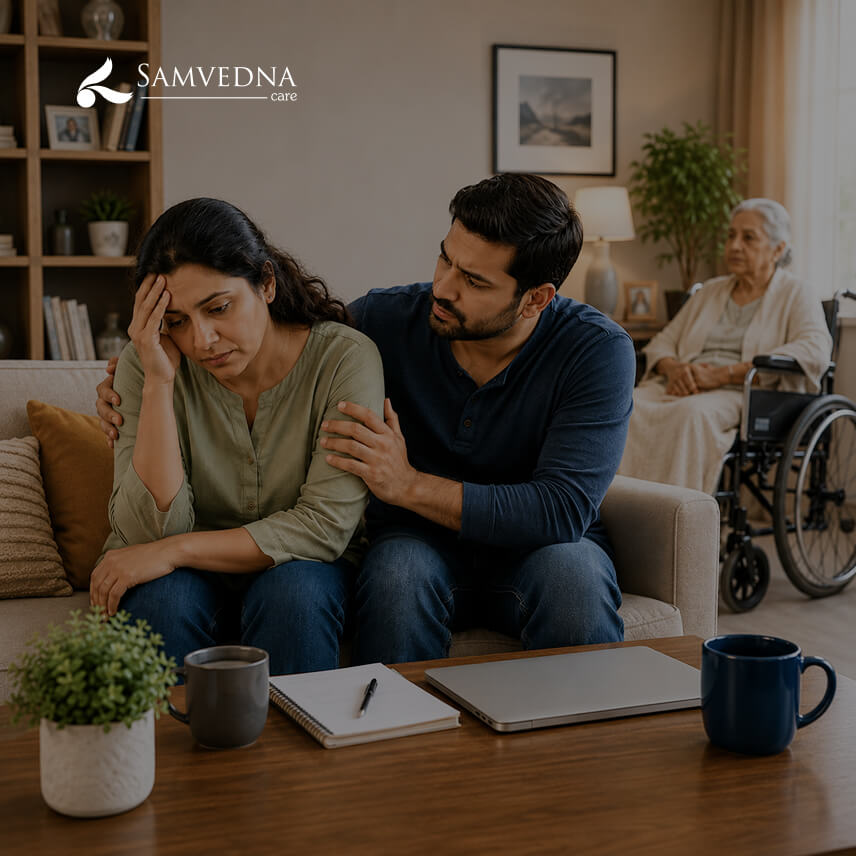
When you become a caregiver for an aging parent, a child with special needs, or even your spouse, your marriage rarely suffers because of a dramatic fight.
Instead, it quietly slips down the priority list.
Exhaustion replaces intimacy. Logistics replace conversation. Resentment begins to build, even between two people who love each other deeply.
At Samvedna Care, we focus on eldercare and mental well-being; we see this pattern repeat daily: the caregiver burns out, and the marriage absorbs the fallout. But understanding why this happens and seeking support through online mental health counselling early can help couples address these pressures before they harden into permanent distance.
The Hidden Toll of Caregiving
Caregiving is rarely a planned role. It often arrives gradually: a parent’s memory starts slipping, a child needs constant medical attention, or a partner develops a chronic illness. The strain shows up in five distinct ways:
- Time and Energy Depletion: Caregiving consumes the hours that once anchored the relationship date nights, shared hobbies, and even basic conversation. When every spare moment goes in medication management and physical care, emotional connection is the first casualty.
- Role Imbalance: Often, one partner takes on the bulk of hands-on care while the other manages finances or the broader household. This breeds dual resentment: the caregiver feels entirely unsupported, while the other partner feels utterly shut out.
- Loss of Identity: A spouse who becomes a full-time caregiver can feel their entire world narrow to just that single label. The playful, ambitious, or social person they used to be seems to disappear.
- Chronic Irritability: Sleep deprivation and financial pressure wear patience to a thread. Small disagreements escalate instantly because both partners are operating on empty emotional reserves.
- Unprocessed Grief: When caregiving involves a declining parent or a difficult diagnosis, couples are grieving while managing daily logistics. Left unspoken, that grief manifests as emotional withdrawal or numbness.
The Reality of the Drift
Conversations quickly become purely transactional. “Did you call the pharmacy?” “Is the appointment at 3 or 4?” Each partner assumes the other understands the sacrifices being made, but without explicit acknowledgment, both can end up feeling completely alone despite sharing the same space.
How Couples Survive It
You do not have to let caregiving break your team. Couples who weather this storm successfully do so by implementing small, deliberate boundaries.
1. Name the Strain Openly
Acknowledging the elephant in the room is not about assigning blame; it’s about recognizing a shared reality.
Simply saying, “I think we’re both struggling right now, and our relationship is feeling the weight of it,” opens the door to problem-solving together.
2. Protect Tiny Rituals
Do not wait for things to “calm down” to connect. Couples who maintain brief daily check-ins, a ten-minute morning coffee, a short walk, or a nightly phone-free conversation often fare much better than those who let all connection lapse.
3. Separate the Caregiver from the Spouse
Set a timer. Dedicate just 20 minutes a day where caregiving talk is strictly off-limits. Use this time to talk about the world, your thoughts, a book you’re reading, or anything else that reminds you that you’re still partners not just co-managers of a crisis.
4. Actively Redistribute the Load
Even minor shifts offer relief. Have the non-primary caregiver take over one recurring administrative task. Look into respite care; bringing in outside help for even a few hours a week gives the primary caregiver vital space to breathe and reset.
Moving Forward, Together
Caregiving tests a marriage in ways few other life events can. It demands emotional reserves you never realized you would need. However, many couples emerge from this period with a much deeper, unbreakable appreciation for one another.
The secret is not waiting until the relationship feels unmanageable to ask for help.
While Samvedna Care helps ease the practical caregiving burden through specialized caregiver support programs, online mental health counselling offers a private and flexible way to process the emotional challenges of caregiving from home. It fits entirely around your caregiving schedule, giving you and your partner a safe space to remember that, fundamentally, you are still on the exact same team.