 +91 74280 97301


In today’s fast-paced world, most of us move from one task to another without pausing to notice what’s going well. Over time, this constant forward momentum can leave us feeling overwhelmed, disconnected, or emotionally drained. One simple yet powerful tool that can counter this is gratitude journaling.
Gratitude journaling isn’t about ignoring stress or pretending everything is perfect. It’s about training the mind to notice the moments, big or small, that offer comfort, support, or joy. Even a few minutes a day can create a meaningful shift in how we think, feel, and relate to our daily lives.
At Samvedna Care, we see the positive impact of small, consistent self-care practices. Gratitude journaling is one of the easiest ways to strengthen emotional resilience and nurture long-term mental wellness, especially for individuals seeking supportive resources such as online counseling for anxiety.
Why Gratitude Journaling Works
Gratitude journaling works because it gradually retrains your attention. Our brains naturally focus more on problems and stress—an evolutionary trait known as the “negativity bias.” While this helped our ancestors stay alert to danger, today it often leaves us feeling anxious even when many things are actually going well.
Writing down what you’re grateful for disrupts this cycle. It encourages your brain to look for what’s working on, a warm cup of tea, a message from a friend, a moment of quiet, or simply getting through a difficult day. Over time, this practice helps you notice positive moments more easily and automatically.
As one therapist beautifully puts it, “Gratitude doesn’t erase the darkness, but it gives you a flashlight.” It won’t solve every challenge, but it can help you move through them with a steadier, calmer mind.
The Biggest Myth About Gratitude Journaling
Many people believe gratitude journaling must be long, poetic, or deeply emotional. They imagine filling pages every day or having profound insights.
But gratitude is most powerful when it stays simple.
Often, the shortest entries create the deepest shift:
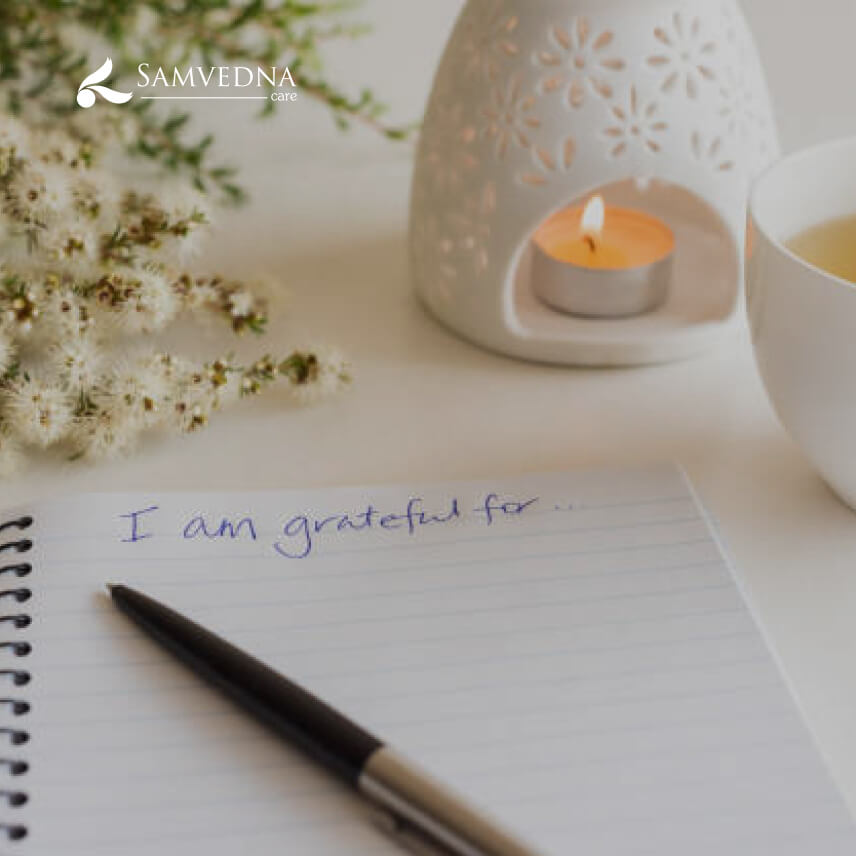
- “I’m grateful for the sunlight today.”
- “I’m grateful I didn’t give up on myself.”
- “I’m grateful for the food I ate.”
These small acknowledgements matter. They remind you that even on hard days, something is still supporting you.
At Samvedna Care, we encourage you to keep your gratitude practice easy and realistic. Just two minutes a day is enough. Your mind doesn’t need perfect paragraphs; it just needs consistency.
How Gratitude Supports Mental Health
When practiced regularly, gratitude journaling can help:
- Reduce stress by redirecting your focus away from worry
- Build emotional resilience during challenging times
- Improve self-esteem by highlighting your strengths and efforts
- Strengthen relationships by increasing awareness of support and kindness
- Enhance mindfulness by keeping you present
- Interrupt rumination, helping you break repetitive negative thoughts
These small shifts build up over time, creating a more balanced and grounded emotional experience, something often emphasized in wellbeing practices and even in online counseling for anxiety
3 Gratitude Prompts That Take Less Than 2 Minutes
Gratitude is one of the simplest and most evidence-based tools for boosting emotional resilience, yet most people imagine it requires long journaling sessions or deep reflection. In reality, small, consistent moments of noticing what’s going well can shift your mindset, reduce stress, and support overall wellbeing.
Whether you’re a working professional, juggling deadlines, a caregiver managing multiple responsibilities, or someone trying to build healthier habits, these two-minute prompts offer a quick reset anytime during the day.
Here are three powerful prompts you can use:
1. One thing that went right today was…
Most of us spend our days scanning for problems, what we missed, what’s pending, and what needs fixing.
This prompt helps you pause and notice small wins, moments of ease, or even neutral experiences that didn’t go wrong.
2. One person I’m grateful for today and why…
Identifying one person, a colleague, friend, family member, or even someone who briefly crossed your path helps you bring small moments of connection and support into awareness.
3. One thing I’m looking forward to tomorrow is…
A future-focused prompt that encourages calm anticipation. It shifts your attention from replaying the day’s stress to recognizing something positive waiting for you tomorrow.
How to Use These Prompts Without Adding Pressure
- Keep a small notebook or use the Notes app on your phone.
- Set a 2-minute timer.
- Answer just one prompt daily, not all three.
- Be honest, not perfect.
- Consistency matters more than depth.
Even the act of pausing to write one sentence can create noticeable shifts in your mindset over time.
Gratitude is not about denying stress, sadness, or burnout. It’s about strengthening your ability to recognize goodness alongside challenges. Especially for working professionals and caregivers, this balance is essential for emotional wellbeing, something we at Samvedna Care emphasize in our mental health work every day.